



“When’s the last time you read something unapologetically pro-choice — and that’s as empowering as it is romantic? Me, never — until Joshi’s follow-up novel! Joshi’s enchanting story is set in 1950s India, a woman’s narrative about the choices she’s been doled and how much she makes with them. Moreover, the performer of the book’s audio version, Sneha Mathan, is marvelous!” ~ My review of The Henna Artist by Alka Joshi for Amazon and Goodreads.
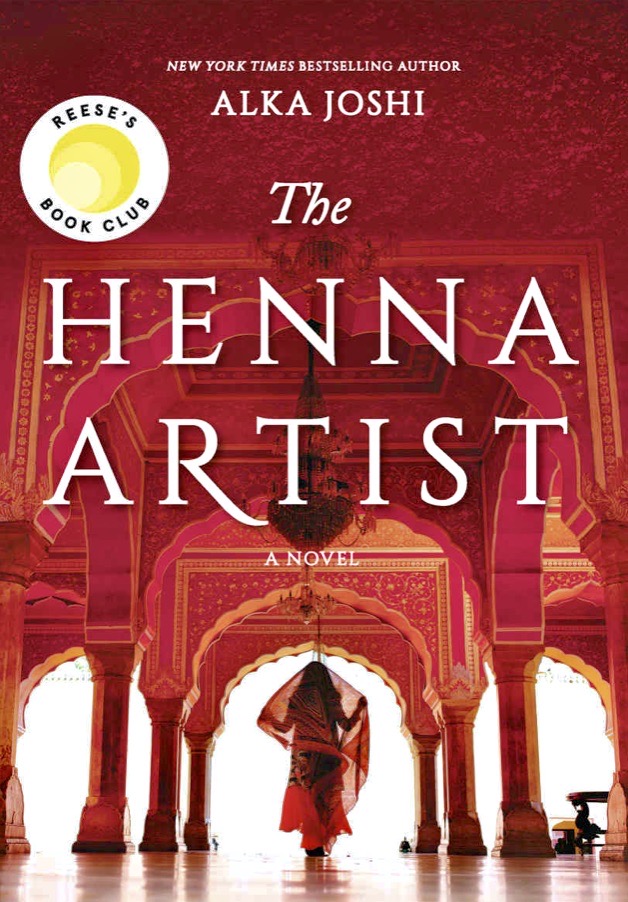
I absolutely adore books (after all, I’m writing three)! Whenever I finish reading an exceptional novel, I review it on Goodreads and Amazon. Sure, not all stories resonate with me. As a tender-hearted author, I know too well the blood, sweat, and tears that even a crappy book demands, so I let other people review those. Afterward, I email the novelist to thank them for making my life more thoughtful and maybe even fun. Ditto for any audiobook performer involved. Some thank me back, and on the days my stars are aligned, they agree to contribute to Happiness Between Tails.
Anyone who doesn’t read The Henna Artist is missing out. Clearly it’s written by a generous spirit. Just glance through Alka’s website and Youtube channel, where she lauds other authors to the extent that she poses with their books, including Elizabeth Gilbert’s Big Magic as she says how grateful she is for it. Btw, I love that book too!
Allow me to digress a moment: Henna, oh, henna, you magical green powder! You enhance my hair, and you make lovely temporary tattoos!…
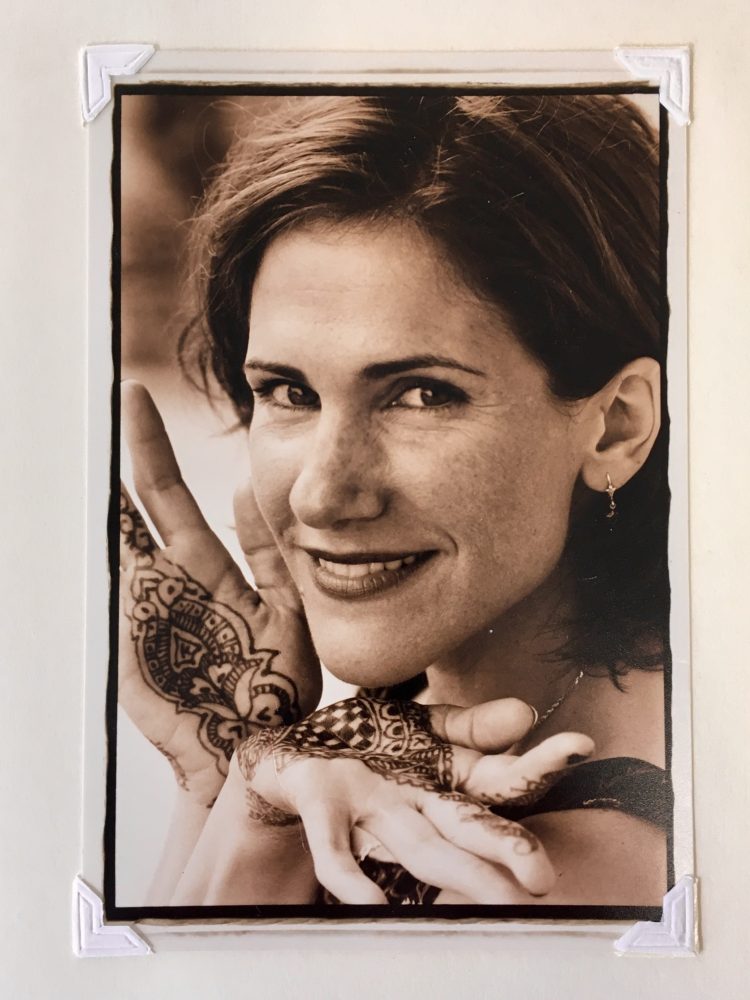
The day before I got married, I drove to Los Angeles’ Little India for these gorgeous henna tattoos.
They’re far more forgiving than the permanent ink ones, and brides aren’t allowed to do housework until they’ve worn off…
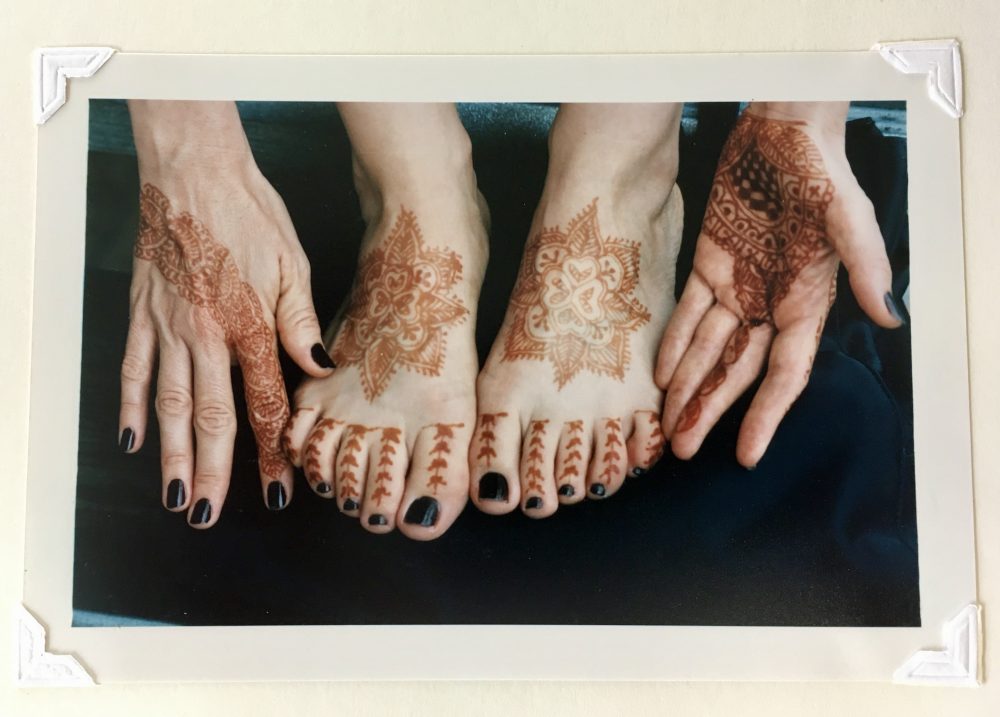
Dusting off my photos to show you these provided an excuse to reconnect with Chris Miller, the super-talented photographer (check out her Instagram too) who was beyond kind to gift them to my sweetie and me. Back when she shot them, we both worked for the Beach Reporter, a Manhattan Beach community weekly. I reported on Hermosa Beach while she worked as a private event photog and as the publication’s photojournalist.

Back to our esteemed guest: Alka was born in Jodhpur, Rajasthan, India. At the age of nine, she moved to the United States. Eventually she graduated from Stanford University and worked in advertising, public relations, and owned a marketing consultancy. Moreover, she has a Creative Writing MFA from Cal Arts San Francisco. The Henna Artist is her first book. In less than a year, it’s a huge success! The sequel, The Secret Keeper of Jaipur, is set for July, plus the third book in the trilogy will come out in 2022. Above and beyond that, she’s an executive producer for the novel’s upcoming Miramax TV series! What follows are her thoughts on women in India. Note that when she speaks of how women, in this case architects, are often undermined, India is not the only country that restricts us. Unfortunately, I’ve met women architects in the United States who encounter discrimination here too…
The Sari vs. Modern India by Alka Joshi
In January 2019, the Architecture faculty at Ansal University in Gurgaon, just outside New Delhi, received an email from the registrar to attend a convocation.

It requested formal dress: “trouser, coat and tie for men” and “saris for women.”

This sparked a lively, funny, albeit very polite, conversation on WhatsApp among the female faculty, who normally wear trousers, Western blouses/tops, or salwar kameez (long tunics with legging-like bottoms) most days.
“I may not wear a sari…I don’t even own one!” “I do not even know how to wear a sari.” “[I’m] not against saris. But at 7:30 in the morning, especially when I’m not used to it is definitely a challenge.” “Can’t tie one at 7am and drive…and get through the day!” “No sari. Impossible to wear and report at 7:30 in the morning.” “Why a sari at all?” “If the women must wear a sari, wouldn’t a *dhoti be more in sync for the men?”
*(Now mostly worn by village men, a dhoti is a white cloth from five to seven yards in length, wrapped loosely around the legs and tied in a knot at the waist. While dhotis have gone out of fashion, saris are still a mainstay of female couture for weddings, special occasions and family gatherings.)
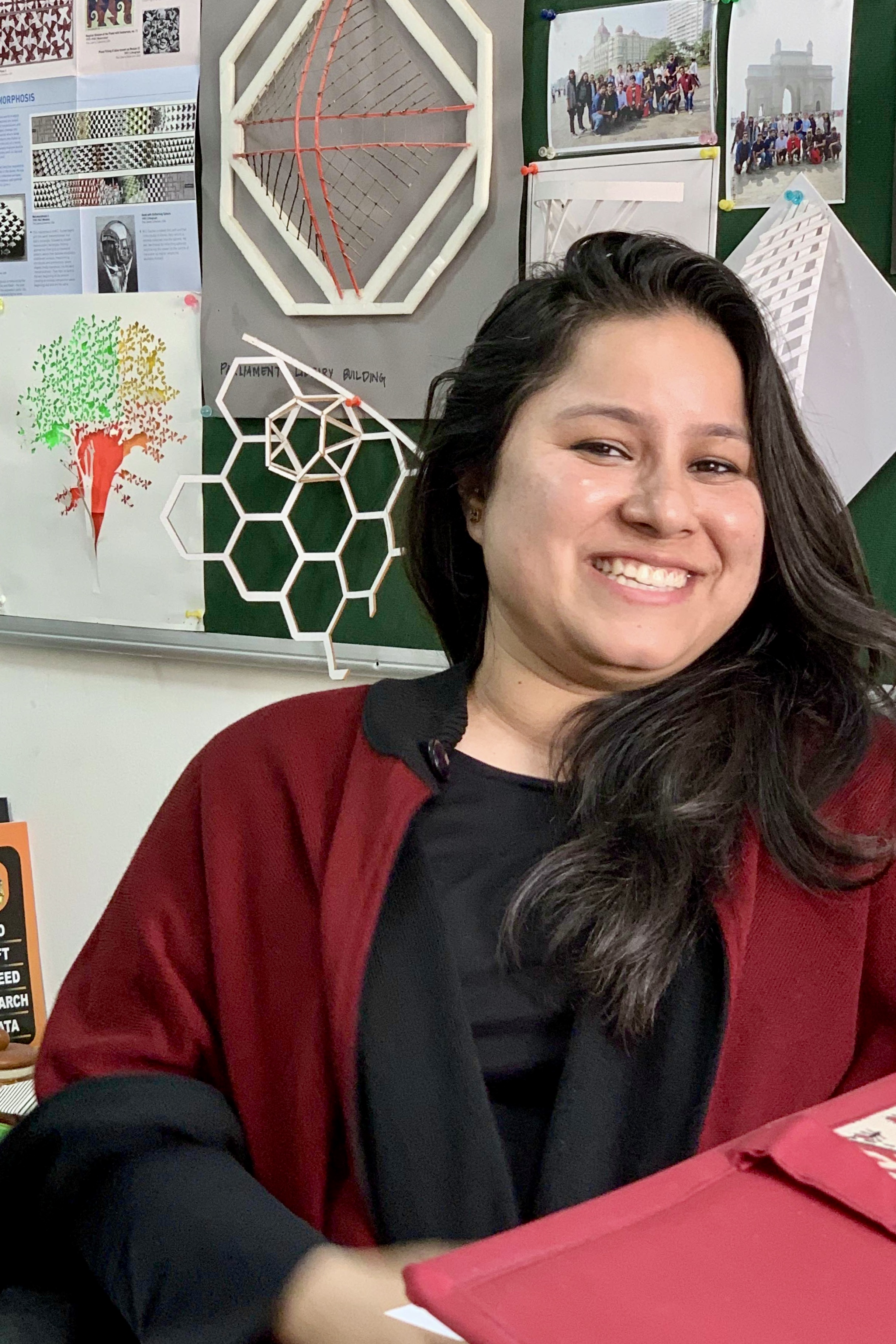
“We are all sensible enough to know what to wear. Most of us might even have worn saris to the event without being asked. But when you tell us exactly what to wear, we are going to have something to say,” laughs Monisha Sharma, associate professor. “Our Dean, who is female, told us to just look as smart as we do every day, so that’s what we’ll do.”
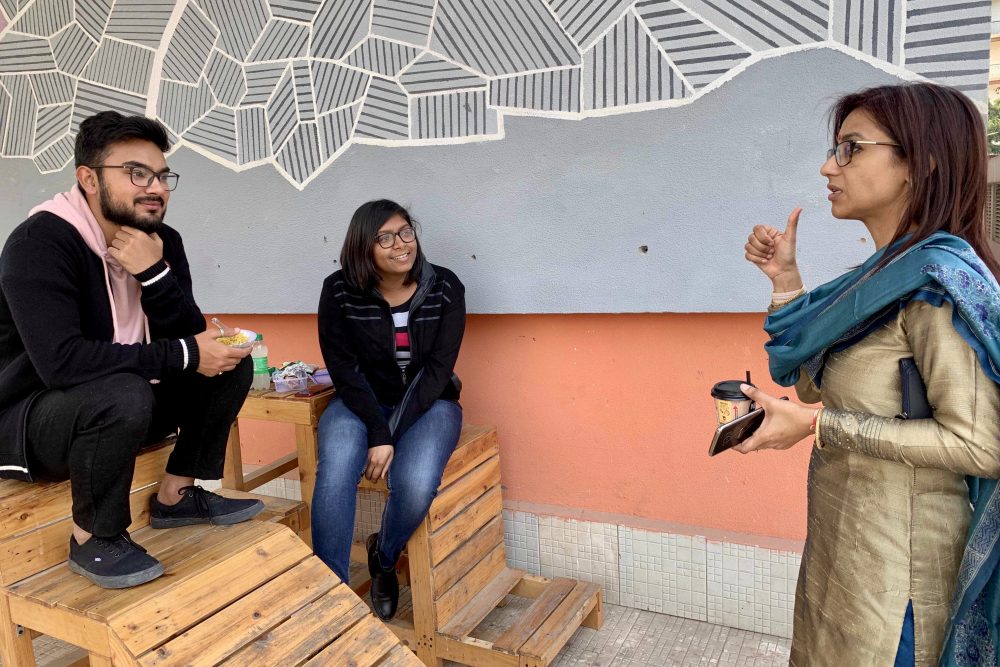
In addition to teaching in the Architecture school, these women are working architects. At construction sites they are often greeted with curious expressions: Can women really be architects? Are these women here to tell us what to do? One professor told me that she had organized a site visit to a factory for her students. When they got to the site, the founder only responded to the junior male faculty who had accompanied her, choosing not to acknowledge her at all. Similarly, a female architect who was managing a project for her father’s structural engineering firm was not being consulted by the construction team until her father ordered them to talk only to her. She was, after all, the project manager and the only one who could answer their questions.

To someone like me, who’s been raised in the West since the age of nine, it’s surprising that the women’s reaction is not anger (that would have been my response, along with bewilderment and confusion). Instead, the Indian women laugh it off. “We have already made our mark in our profession,” they say. “We don’t need to hit them over the head with it.” At the convocation, the female faculty wore Western trouser suits. Not a sari in sight. There’s more than one way to make a statement.
Have you tried a henna tattoo?
Discover more from Happiness Between Tales (and Tails) by da-AL
Subscribe to get the latest posts sent to your email.


I loved The Henna Artist book as well, and thank you for sharing your lovely pictures!
LikeLiked by 2 people
tx for stopping by, Yaya – can’t wait to see the tv version
LikeLiked by 1 person
Yaya is my mother’s name ❤️🙏
LikeLiked by 1 person
Tremendous support much merited as I have learned quite a bit about this issue which transcends all cultural beliefs it seems. Thank ya!
LikeLiked by 2 people
you’re very welcome
LikeLiked by 1 person
Small world of bloggers and podcasters searching for answers to the world’s problems and reading posts comments and observations while providing support to the contributors and a dose of Judge Mathis: Tough Love ❤️
LikeLike
Patriarchy is a piece of crap 💩 and it’s high time that women do as they please! Enough with the excuses for us guys to continue telling anyone else what to do. I have 2 grown daughters and plenty more nieces and female former students who we emboldened to learn how to say the most powerful weapon of all, the word: NO! Saris 🥻 or no saris 🥻 outerwear like underwear 🩲 is our choice to make. Sensible people are still living; let’s join them Jajaja 🙏🐕♒️💯🗣😷☮️
LikeLiked by 3 people
well said!
LikeLiked by 2 people
I am an avowed women’s rights advocate and proud of it!😀🙏🙃❤️
LikeLiked by 1 person
so glad!
LikeLiked by 1 person
Oh, I love henna tattoos, and your looked stunning! This also reminds me years ago when I was in university doing a master’s degree in literature, and our Professional Rhetoric prof told us for presentations we would have to wear business attire–jackets and skirts for the women. I had neither, but had to go out and get something suitable–I’m so happy these days women can stand up against this kind of gender stereotyping!
LikeLiked by 1 person
great sad story, Suzanne – when I visited Iran in 2006, was interesting to note that women wore pants, not skirts, as the ‘more conservative wear’ — so much is our perception…
LikeLiked by 1 person
Fantastic and well published post, da-AL. You are looking so nice and young as a bride and your henna too is looking so gorgeous. In India our national dress is a Saree and our women look so beautiful in sarees. They are an office attire too. We do not have the concept of wearing western outfits in many offices. Thank you so much for your awesome share.
LikeLiked by 1 person
I am blushing, Kamal 🙂
LikeLike
☺️☺️☺️☺️☺️
LikeLiked by 1 person