Got people for whom avarice, jealousy, and self-interest eclipse their care for your well-being? Sociopath, psychopath, narcissist, shark, snake; you say pota-toe, I say pata-ta? Seriously though, beyond the fact that I’m a wordsmith (about my books here), knowing who and what we’re dealing with can aid us in getting along with different types of people and, more importantly, to protect ourselves.
When holier-than-thou individuals boo-hoo, “It breaks my heart that so-and-so’s people never call or visit them,” I’m the cynic who retorts, “Did you stop to consider that maybe, behind doors, they’re so thoroughly hateful that they’re lucky they’re not treated worse?”
Forgiveness, to my mind, isn’t a cure-all. Not when acceptance is what’s truly called for.
It can take a shattering of dreams to accept the reality that some people are out-and-out poison. Some venoms, at low doses, are tolerable. Others necessitate a hazmat suit. Better yet, full avoidance. In a perfect world, toxic people would wear labels with dosage instructions, side effect warnings, and drawings of x-d out skulls.
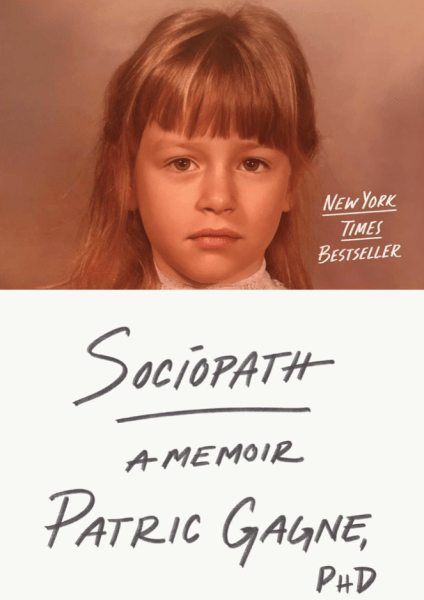
In Sociopath: A Memoir, Ph.D. Patric Gagne lets us in on how we’re all born with varying degrees of emotional capacity. Those genetically unencumbered by empathy and guilt should be acknowledged. Social stigmatization, she reasons, only contorts sociopaths like her into relieving frustration by committing bad deeds. Her bonus note is that those who stress over hurting people would do well to let a little sociopath-ness rub off. Many of our culture’s favorite characters are narcissists who dashingly barrel through life without a care.
Here’s my review of Dr. Gagne’s book for Goodreads and Amazon: “Thank you, Dr. Gagne, for allowing me into the living room of your mind. I need this reminder that none of us is completely good or evil. The earlier in kids’ lives we recognize that, the better. Superimposing ideas of how people should be, rather than striving to see one another for who we truly are, is disrespectful and destructive to all involved. Now how can non-sociopaths avoid getting duped and worse by sociopaths?”
That’s about kids, though. What do you do with adults for whom gaslighting is the least of their self-serving skills? The best I know is to erect boundaries, run for cover, and appreciate all the angels in my life who do have my back.
Today’s guest, Dr. Vicki Atkinson, authored Surviving Sue, her resiliency story about her mother’s complicated life. Dr. Atkinson holds a doctorate in Adult Education and is a licensed professional counselor (LPC) and a former college dean. Check out her blog, listen to her podcast, and find out more about her book here, plus read a sample of it here.
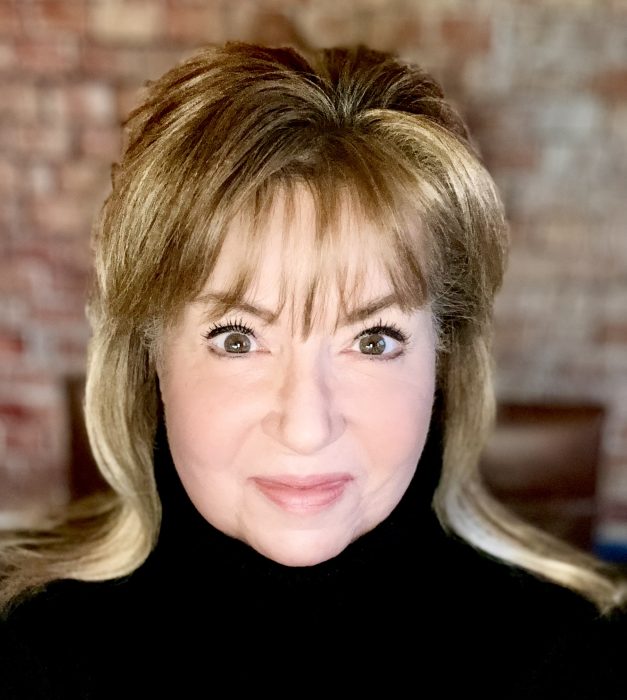
Writing for Wellness by Dr. Vicki Atkinson
One day you will tell your story of how you overcame what you went through and it will be someone else’s survival guide. — Brene Brown
When our daughter, Delaney approached me and told me it was time for me to peel back the layers, help her understand our family history – especially the roller coaster experiences she witnessed with my mom, her grandma (Sue) I was worried. For years, I’d held back. Glossed over and tried to shield Delaney from the madness. Make light where I could. Protect her. But over time and as she earned her college degree and explored her interest in psychology, Delaney challenged me to put the pieces together. Imploring me to write. Write it out.
I’d smile and tell her ‘someday’. What I didn’t realize is that it would take nearly six years for me to feel safe enough to tell the story. Six years after my mom Sue had passed away. I understand now. Not just from my professional perspective as an educator and mental health provider but from my own, unique journey in recovery as I healed and made peace with a mother who was largely incapable of mothering. I wrote to heal. To build resilience.
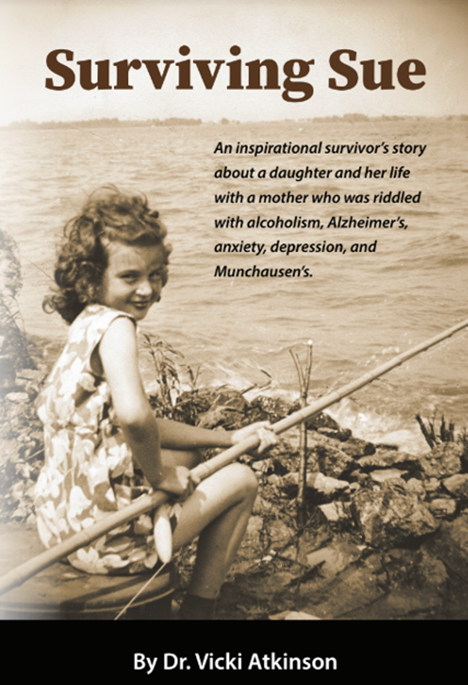
Surviving Sue tumbled out of me in three months. The story was tucked within, but the courage and motivation to write about Sue’s madness and its origins – her painful childhood which propelled her into a lifetime of bad decisions – needed to come from hope and healing. Not retribution and acrimony. I needed those six years to gain perspective and equilibrium. But when I was ready? So was the story. Intergenerational healing provided intention and motivation, thanks to Delaney.
I also had the support and encouragement from a dear family member who saw Sue’s madness and decline and read as I wrote, urging me forward. “Your story will help others” he said. He helped me make peace with the struggle between recounting the madness with Sue while trying to respect others who were in her orbit. A balancing act, for sure.
Surviving Sue is about the thin line between attraction and repulsion and the challenges Sue faced with watchful eyes upon her. Sue lived her life pivoting from charismatic Sue, the life of the party, to Sue who was in self-destruct mode, attempting to assuage her guilt. A lifetime of remorse about the impact of impulsive decisions. Behaviors resulting in my sister Lisa’s premature delivery and a future filled with vulnerabilities; things Sue could never undo.
Revelations come when you examine generational patterns of deceit and the destructiveness of secret-keeping.
As I celebrate the one-year anniversary of the release of my book, I’m humbled by the response I’ve received from readers. Despite the tragedy and pain points, the story of Surviving Sue is about resilience-building and recovery. A love letter to the people who rose to meet me, helped me navigate the challenges of dealing with my mother’s mental health issues and my sister’s disabilities while caring for my own family…and myself.
Feedback from readers about the predominant themes of inclusion, navigating elder care and championing the rights of those who are different brings me great joy. The comparisons readers have drawn to whole-hearted books, like “Angela’s Ashes” and “The Glass Castle” humble me, reminding me of my purpose: Helping others.
How do you protect yourself from toxic people?
Discover more from Happiness Between Tales (and Tails) by da-AL
Subscribe to get the latest posts sent to your email.


Why is it always “Sue”?
In my life, it’s always been a Sue. I don’t know what it is about that name, but any time I’ve had a Sue in my life it was always bad news, one way or another. Only once, so far, did association with a “Sue” result in death, but still.
LikeLiked by 1 person
Interesting you’ve had experience. I haven’t experienced that though I do know that Susan was a top name for girl babies in the 40s or thereabouts
LikeLike
Ah, that could be it. Just simple odds. I’m sure that people with other names were aggravating, too. I just noticed the Susans since the first one was my sister.
LikeLiked by 1 person
🤣
LikeLike
wonderful sharing of Vicki da-Al. She’s truly gifted and her book is compelling. ❤️
LikeLiked by 1 person
Agreed Cindy. Much appreciate your visit 😃
LikeLike
[…] health provider is Dr. Vicki Atkinson, who draws from personal experience on how to survive a toxic family tradition. […]
LikeLiked by 1 person
Thanks for linking!
LikeLike
What happened to Dr. Atkinson, happens more often than we think. And children don’t know that they grow up in a toxic environment; the environment they grow up in is their normal. So, they can first make choices when they broke away from their background and experienced other environments, if they should be so lucky.
My own background let me decide to never ever get married. 😉
How do I deal with toxic people? I stay away from them if I can. If they are at work, it can be difficult, but I would rather change job than staying in a toxic environment. Sociopaths etc. do not stress over hurting people.
LikeLiked by 3 people
Stella, what a great point that “Sociopaths… do not stress over hurting people.”
LikeLiked by 2 people
Indeed Dr. Atkinson makes a great point Dana. Just as an aside, the sociopath book discusses how the author wishes the rest of us could unburden ourselves of at least some of our guilt and shame. At the same time, she also notes that their not being able to fit in can make for much depression
LikeLiked by 1 person
Thank you for reminding me of the ASPD spectrum, da-AL. It cannot be easy for those with the disorder to navigate “normal” society.
LikeLiked by 1 person
ASPD spectrum is more accurate and much easier to relate to. Who among us doesn’t flinch at certain words like how sociopath only brings mass murderer sorts to mind…
LikeLike
True Birgit. I think you and I have much in common. I swore I would never marry yet here we both are. hoping all is well and happy with you and Steffan 💕
LikeLiked by 1 person
Haha, yes, things happen and surprise us. Yes, thank you, everything is fine. with you and Khashayar too, I hope, you are such a sweet couple.
LikeLiked by 1 person
Thank you dear. Unfortunately Khashayar’s father passed away very recently so we’ve been very sad
LikeLiked by 1 person
I am sorry for your loss! ❤
LikeLiked by 1 person
Thank you 🙏
LikeLiked by 1 person
Thank you, da-AL! It’s definitely something I’d read so I’ll probably buy it 🙂
LikeLiked by 2 people
Glad for that. I hope it helps you
LikeLike