
Today’s guest, writer/teacher Bojana Stojčić, is from Serbia and lives in Germany. Many publications feature her work — most exciting of all, she just published her first book of fiction! Read to the end for how to get a copy of Knives All Blade…
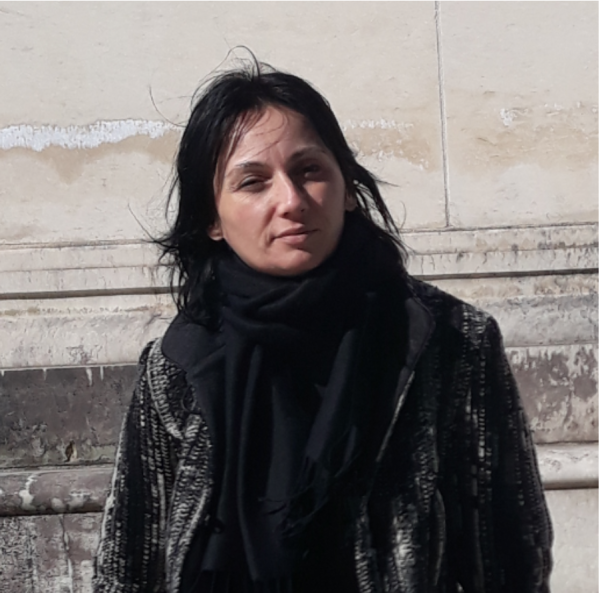
The Necessity of a Blank Page by Bojana Stojčić
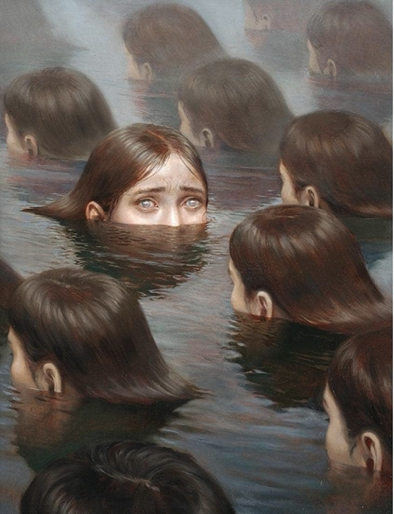
“We are like books. Most people only see our cover, the minority read only the introduction, many people believe the critics. Few will know our content.” — Émile ZolaEver since I’ve taken up reading seriously, and it’s been a while ago, I became deeply aware of the power of words. In contrast to real life, through, where “the tongue has the power of life and death,” being able to either encourage or break you beyond repair, books, no matter how sad, melancholy and/or hard to digest, do exactly the opposite. Most importantly, they don’t judge, letting us be whoever we want to be. Having recently had a book published myself, made me even more aware of this. Of the need to pace myself (while eating, reading, walking.) The need to take time for myself, make room for doing things I find fulfilling. Listen to non-verbal cues, and ask more questions than I think I need to and, yes, have zero tolerance for bullshit, which is why I’m self-employed (and happy.) As a writer, to capture the moment is to cup the swirl of emotions, feelings and sensations associated with an experience in your hands and to then share what you hold with your audience. However, being a writer can be pretty daunting, as the journey we take is a long and solitary one. Intimate, if you will. It’s just you and endless blank pages that will become smeared with dirt, sweat and blood once you’ve let go of your restraints, both physical and emotional, of everything that holds you back, be it moderation, sobriety or shame, once you’ve overcome your poor self-esteem and your fears, unlearning an almost compulsive need to be liked and showing your vulnerability without feeling weak. And no one but a blank page can take that much. Not even your loved ones, nor other writers. All the time, that is. Let’s face it, writers are chronic complainers, moaning and groaning. All.the.time. We bitch because we didn’t get published. Then we bitch after we do, regretting all the words and thoughts that could have and should have been included in the book, we bitch for not being valued enough, but feel oddly uncomfortable when recognition finally comes. Telling you, no one but a blank page could take it. Including us who write, which is why we hold the blank page in such high regard, treating it as some sort of deity. We are all tabula rasas (blank slates) at birth, Mr. Locke taught us. That’s how we start this journey called life—as white paper void of all characters, without any ideas, or rules for processing data. With simple ideas that we, with time, combine into more complex ones. Authors too take so much for granted, though not the blank page. Never the blank page. Even literally, when holding your own/someone else’s book in your hands. So, why do we leave blank pages and what does a blank page really mean, besides being a sheet of paper that doesn’t have anything written on it? Seems like a waste of paper, doesn’t it? Well, not exactly. First and foremost, books start with blank pages, marked “intentionally left blank,” for both aesthetic and practical purposes, creating a cleaner look for the book’s opening, and enabling a smoother transition into the text, particularly for works of fiction where the author may want to set a specific tone and atmosphere from the very first printed page. What’s more, this allows for personalization when gifting a book, which is kind of neat. I read once that for Indians any good deed begins with praying to God, the first blank page being left in God’s name so that his blessings stay with us while we use the notebook to acquire knowledge. This is very relatable, although I’m not a religious person (in any traditional sense of the word.) Maybe because, in my world, reading a book is a spiritual experience, sacred even. Avid readers and book nerds (which is actually a compliment) will get it. Personally, I wanted my readers to take their time. I, for once, wouldn’t like to be rushed into reading a book the moment I open it. I always pace myself. I check out the covers, illustrations, if any, I smell it, open the pages slowly, thoughtfully, enjoy each and every moment along the journey. It’s a very personal connection. Or is it just me, and my obsession with white space, which my amazing editor Suzanne Craig-Whytock (who also writes books and blogs) didn’t ask me to get over, greeting it with a warm embrace instead. Most likely because she’s a writer herself, deeply aware of all those blank pages craving to be filled with content.
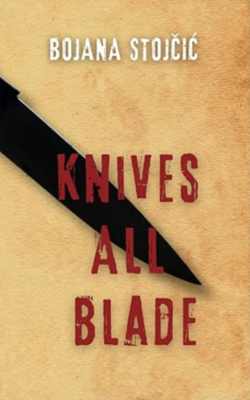
Now a bit about my debut book — Knives All Blade (DarkWinter Press)
This full-length story collection depicts mostly female characters, but isn’t solely women’s fiction. It’s an inward-bound journey, because I’m not a plotter. I don’t plot well. Though examining the current contemporary life, which at times overlaps with the recent past, presented through flashbacks, with people “flock(ing) to Holland to see all those colors oozing from the stems,” and “land(ing) in the dark of Afghanistan—ugly, but not the way he imagined,” most stories are, however, set in anonymous places, engaging ominous and strange landscapes in plot twists and turns. While the endings are, as a rule, sad, abrupt and/or left up to readers’ interpretation, sometimes nothing is resolved, the characters ending up “just plain numb,” which makes this collection anything but a fun and easy read. Rather unpredictable as well, since you’re never quite sure where the story might lead you. Grab your copy by clicking on this link, folks. I hope you like roller-coasters. (Some like it wild.)Do you ever feel like you’re swimming against a current of your own making?
Discover more from Happiness Between Tales (and Tails) by da-AL
Subscribe to get the latest posts sent to your email.


Excellent 💯
LikeLiked by 1 person
Thank you!
LikeLike
Both the art and the guest article are memorable!
LikeLiked by 2 people
Glad you enjoyed them!
LikeLike
You’re welcome!
LikeLiked by 1 person
[…] In Happiness Between Tails, da-AL guest hosts Serbian writer Bojana Stojčić, who suggests thinking of the process as the personal vulnerability that may come with sharing intimate communication with strangers. […]
LikeLiked by 1 person
Thank you for linking Burr 😊
LikeLike