Is a great novel the one you had the most fun reading? One that transported you to a whole new situation, a new land, a new time? Or did that story unlock new insights? How about one that allowed you to feel understood and less alone? What about the books of childhood, which stripped away all the anguish of being small and vulnerable? Is your favorite one that’s compelled you to read it more than once?
The desire to read
I was born ready, jumping out of my diapers with eagerness to comprehend how written language worked.
My reading list from the start
All printed words that came my way. Food wrappers, cereal boxes, and street signs were intermingled with picture books.
School days
Fourth-grade outings with my best friend were bike rides to the library. There I would tick off readings from the Newberry Medal list (the highest esteemed American children’s books). Kids’ magazines with fiction, grown-up mags that featured stories, books lying about the house, I was starved for reading no matter how much I learned. That included Playboy Magazines, The Godfather, Marquis de Sade. That last one fascinated eleven-year-old me not for the sex (it went over my head), but for how sadomasochism mirrored the day-to-day I saw. Later in high school, Shakespeare taught me how stories can tap numerous levels beyond surface and deep.
Lately
My idea of “best” has more to do with whatever I’ve recently read that left an impression. Since embarking upon novel-writing, much of my fiction is via audiobooks. Minutes spent sitting is time I could be writing. The books I select are for enjoyment as well as for learning. Since the books I’m writing, “Flamenco & the Sitting Cat” and “Tango & the Sitting Cat,” are epistolary (correspondence or diary), I’m apt to download books of that style. That includes the historically latent “Frankenstein” and “Dracula,” the contemporary “Queenie,” the fizzy “Bridget Jones’s Diary,” and “The Roxy Letters.” Non-epistolary includes anything by authors like Anne Patchett, and Anne Tyler, who’s endings are complex. Elizabeth Gilbert’s recent protagonist encourages us to never regret losing our virginity. Now I’m dizzy with memories of beautiful reads, too many to note here but irresistible to type: “Little,” “A Tale for the Time Being,” “Kindred”… I can’t wait to read Kathleen Rooney’s latest (she was so very kind to be a Happiness Between Tails guest here).
Ian Craine, writer
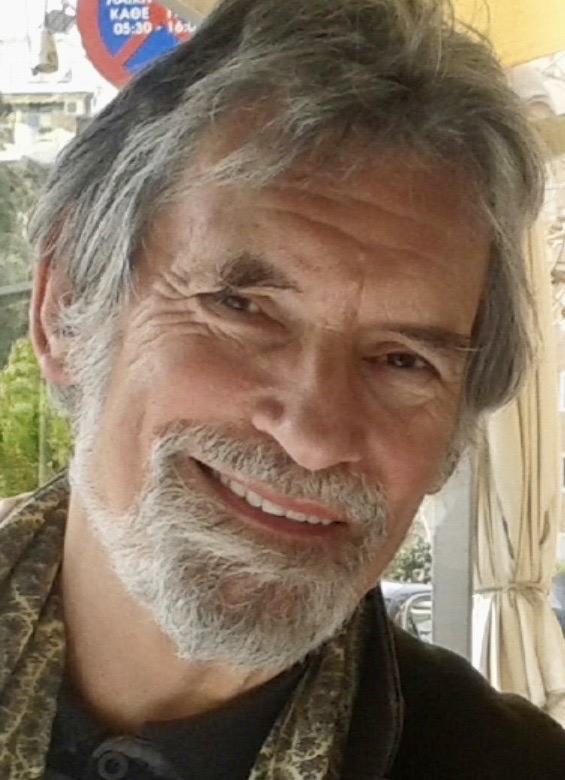
With that, dear readers, let’s meet Ian Craine — he often blogs on his wife’s site (Roberta Franklin is a writer of romantic fiction). He’s a Brit currently living in London who hopes to move to Wales and has worked as a lawyer, a book indexer, and a writer. He enjoys history, books, writing, walking, travel, horse racing, cinema, and music.
About writing, he notes, “…to write, one first of all, has to be able to read. Our life experiences, as Borges once said, include both the things we have done and the books we have read. Reading needs to be a balance between fiction and non-fiction, both from the reader’s and the writer’s point of view.”
Ian has written screenplays in various genres, novellas, stage plays, articles, short stories, flash and poetry. As for novels, he says, “…I confess I have always signally failed there. Somehow I just cannot write that many words. Perhaps I just haven’t got enough to say. But I admire anybody who can from Miguel Cervantes to my own wife.”
A lover of good novels, here are the ones he regards as the best six…
Six Great Novels: Ian Craine’s picks (in chronological order)
“Don Quixote” byMiguel Cervantes: This is where the novel began, this is the template. It may never have been bettered since. It’s wonderfully layered, whose story are we hearing? This is a world that contains all worlds- those of dream, of memory and of imagination, of bawdy and elegy, the fantastical and the prosaic. This satire of romance now bears its own warm romantic glow. It has inspired many of the world’s greatest writers — Diderot, Mark Twain, Borges, Graham Greene, Nabokov, Carlos Fuentes — as it was inspired by Homer’s majestic Odyssey.
“The Black Arrow” by Robert Louis Stevenson: Stevenson was a man for all seasons from the early spring of childhood with tales like Treasure Island to winter’s disillusionment of old age in South Seas Island novellas such as Ebb Tide. My choice is in the earlier category, a stirring tale of derring-do from “The Wars of the Roses.” I am sure it was as fun to write as it is to read.
“The Alexandrian Quartet” by Laurence Durrell: These are four linked tales, the first three told contemporaneously but from different points of view; the fourth is subsequent to the earlier events. To me, nobody has combined a sense of place with a sense of the human condition as perfectly as Durrell. Alexandria is described on every page as the essential witness to all the characters do — their affairs, relationships, journeys, and desires. Beautiful descriptive writing effortlessly merges with a keen post-Freudian feel for humanity. It’s an object lesson too, in the primacy of the novel in describing human behaviour. This is rich beyond anything Freud himself ever wrote.
“Downriver” byIain Sinclair: As Durrell wrote of a city, so Sinclair wrote of a river. The river is the Thames. The starting point is Thatcher’s London, the “revival” of the dockland with bijou apartments for bracered brokers, and it takes place largely downriver of the City, where such folk “earned” their commissions. The book, told in ten chapters, brings us an incredibly rich mix of deeply eccentric characters and allusions to episodes in London’s history over the centuries. Sinclair was a walker (till age put paid to his excursions) with a sharp eye for the topography and architecture of London, and the effects of crushing change on those left behind by the sudden hysteria orchestrated by “The Widow.”
“The Blind Man’s Garden” byNadeem Aslam: It’s 2001 and 9/11 has come and gone. But this is not about its effect on the West. This is what happened afterwards in Afghanistan. A beautifully evoked Pakistani family, each with their problems and preoccupations, are torn apart when the son decides to go to Afghanistan as a medic. An adopted “cousin” goes along for the ride. But they are too naive (perhaps a modern version of our old friends, the Quixote and Sancho Panza) and those they think are helping are out for their own cut- they are sold to the Taliban. Now they have to tread with care amidst their new “owners” while the other enemy, the Americans, fill their skies with terror and destruction. But like all serious novels about conflict, this is about trying to find common ground, mutual respect and reconciliation amid the chaos. Only “Sancho” survives because only he would have been equipped to survive. And this tremendous book, beautifully written, a tale of redemption amid horror, is his Odyssey. New ways of telling old tales.
“The Professor and the Bird” byRoberta Franklin: This is a beautiful story, again with a strong sense of place, and like The Quartet set in the Mediterranean by a writer deeply conversant with the rhythms of life of Greeks and Turks and the Levant generally. She tells a lovely tale of May and November. A sparky young Irish girl on a motorbike meets an ageing Greek archaeologist. They would appear to have little in common at first, but a love of history, the sort buried deep beneath the sands and sea of the Med, begins to bring them together. She is friendly and open, he kind but academic and diffident. Their burgeoning relationship is told with warmth and humour, and the supporting crew on the dig all have their own stories to tell.
Discover more from Happiness Between Tales (and Tails) by da-AL
Subscribe to get the latest posts sent to your email.
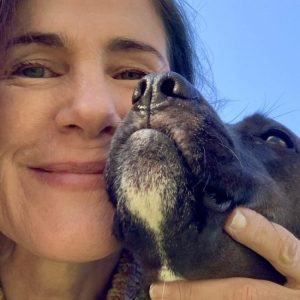
Happiness Between Tails speaks to and from the heart. It connects lovers — of pets, authors, books — and of my still-unreleased novels, “Flamenco + the Sitting Cat” and “Tango + the Sitting Cat.” The stories are my love letters to all who fear they're too odd, too damaged, too old, too whatever to find happiness. ContactdaAL@gmail.com • BuyMeACoffee.com/SupportHBT
View all posts by da-AL
33 thoughts on “6 Greatest Novels by Ian Craine”
An interesting selection. I’m intrigued by the last two, and adding them to my wish list. I do like recommendations.
This is such a fun post, Daal. Yes, I also love to read, and though I’ve read some of the books on these lists, I have my own favorites. I’ve also loved writing since I was in elementary school. Human beings are social creatures, and we imagine-talk-share. Those are the seminal properties of story telling. The earliest hominids who sat around a camp fire and grunted the recent hunt for dinner, the recent escape from being dinner – they were the first story tellers. Those early stick images dragged into clay and left behind on cave walls, in the bark of trees, on desert boulders are all stories. So my favorite 6? Can’t narrow it down but I know I’m moved by insight into the magic of living.
Read (and still have the black arrow). Didn’t like Durell. Larry. His brother Gerald is much more fun. I still have most his books.
Hope all is well? How have you been?
I am doing well, thank you 🙂 tired of sheltering, but also disappointed at how the loosening of restrictions has made people stupid & now virus incidents are on the rise. how about you, friend?
Same here. This disease has brought out the worst in many people… At the top and across the entire population… The only option is to stay home and wait I’m afraid.
it feels emotionally draining to gear up to go out on the safari of leaving home for errands — the saddest thing is how it’s seeping into contemplating any interactions…
It does. We haven’t seen any friend in 3-4 months? Our daughters and grandkids only recently. And had to cancel our July trip to Paris… Arrggggh! (But I probably said that already…)
🙏🏻
Wow, de-AL, you jumped out of the diaper and ready to read, that’s fascinating. My granddaughter started reading before she started crawling. By 15 months old, she read by herself in her own bedroom (caught by my daughter and took a photo). She memorized more than 20 books by two-and-a-half. So she was ready to read when she was in diaper.
I read everything when I was a kid also. I read the first page crime news when I was fourth grade.
I liked Ian Craine’s pick of novels. Thank you for this post!

Ian Craine, writer
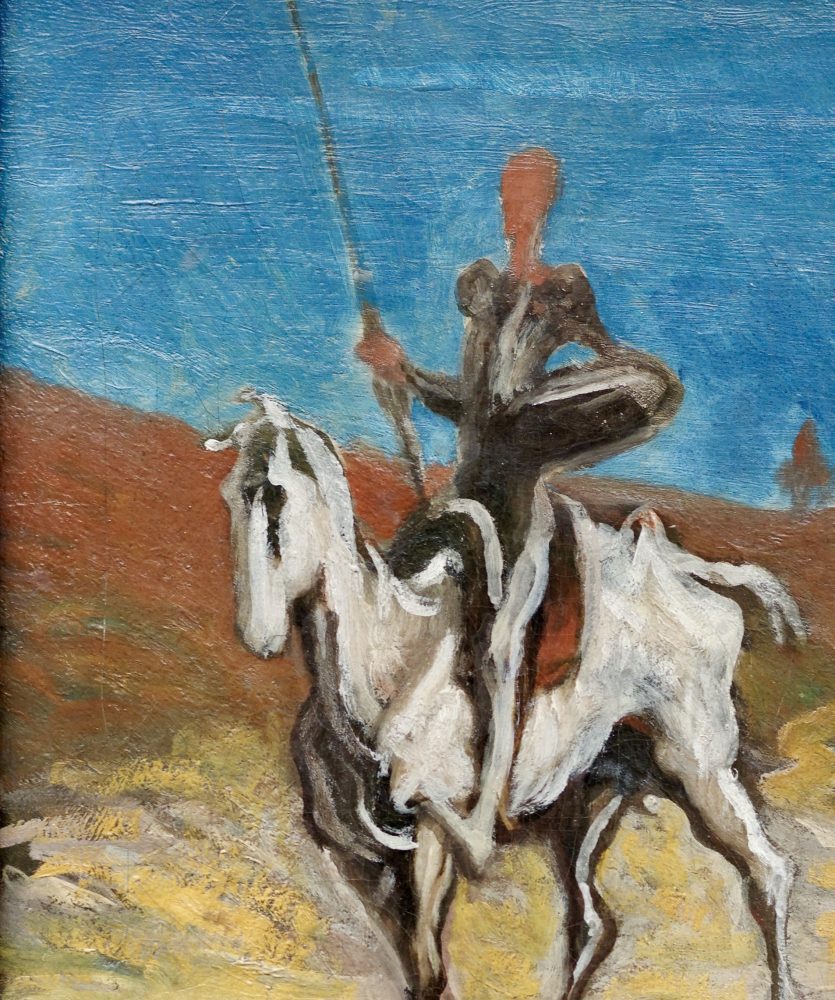 Don Quixote and Sancho Pansa by Honore Daumier


An interesting selection. I’m intrigued by the last two, and adding them to my wish list. I do like recommendations.
LikeLiked by 1 person
so glad you enjoyed this, Cath 🙂
LikeLike
BTW: Read “Salmon Fishing in the Yemen” by Paul Torday. A wonderful epistolary book! And then see the movie.
LikeLiked by 1 person
This is such a fun post, Daal. Yes, I also love to read, and though I’ve read some of the books on these lists, I have my own favorites. I’ve also loved writing since I was in elementary school. Human beings are social creatures, and we imagine-talk-share. Those are the seminal properties of story telling. The earliest hominids who sat around a camp fire and grunted the recent hunt for dinner, the recent escape from being dinner – they were the first story tellers. Those early stick images dragged into clay and left behind on cave walls, in the bark of trees, on desert boulders are all stories. So my favorite 6? Can’t narrow it down but I know I’m moved by insight into the magic of living.
LikeLiked by 1 person
am with you on all counts, dear Sharon — can you imagine having to pass along stories only verbally & pictorially?! lucky us for our wonderful books ❤
LikeLiked by 1 person
Read (and still have the black arrow). Didn’t like Durell. Larry. His brother Gerald is much more fun. I still have most his books.
Hope all is well? How have you been?
LikeLiked by 1 person
I am doing well, thank you 🙂 tired of sheltering, but also disappointed at how the loosening of restrictions has made people stupid & now virus incidents are on the rise. how about you, friend?
LikeLiked by 1 person
Same here. This disease has brought out the worst in many people… At the top and across the entire population… The only option is to stay home and wait I’m afraid.
LikeLiked by 1 person
it feels emotionally draining to gear up to go out on the safari of leaving home for errands — the saddest thing is how it’s seeping into contemplating any interactions…
LikeLiked by 1 person
It does. We haven’t seen any friend in 3-4 months? Our daughters and grandkids only recently. And had to cancel our July trip to Paris… Arrggggh! (But I probably said that already…)
🙏🏻
LikeLiked by 1 person
it bears repeating lol
LikeLiked by 1 person
Wow, de-AL, you jumped out of the diaper and ready to read, that’s fascinating. My granddaughter started reading before she started crawling. By 15 months old, she read by herself in her own bedroom (caught by my daughter and took a photo). She memorized more than 20 books by two-and-a-half. So she was ready to read when she was in diaper.
I read everything when I was a kid also. I read the first page crime news when I was fourth grade.
I liked Ian Craine’s pick of novels. Thank you for this post!
LikeLiked by 1 person
well, now you’ve caught me in an exaggeration, lol. I wasn’t a genius, then or now. crime news — yes, that too, even tho would keep me up at night!
LikeLike
Oh that’s great when you have books keeping you up at night!
LikeLiked by 1 person