

A couple of posts ago, I wrote about abuse I’ve experienced at the hands of family members. When I learned some people only partly understand what the #MeToo movement is, my last post clarified how #MeToo is about survivors. #MeToo stops the cycle, lets survivors know they’re not alone, and teaches compassion. When I unburdened myself of keeping lifelong secrets to protect those who abused me and those who enabled them, it was to join all who work toward a better world. My father passed away years ago. My brother is past retirement age and past putting his now adult kids through college. (As you might imagine, the emotional hangover has wrecked havoc on my novel writing.)
I’m utterly indebted, dear virtual friends, for the kind words of many of you. My real life dear ones, who I call family rather than relatives, have also helped me through.
Much as I’ve worked a lifetime to prove otherwise, call it my attempt to prove myself unique from the Western culture I’m part of, the world doesn’t contain enough emotional distance to escape that I am a leaf on an ancestral tree wherein those on the closest branches have the least genuine regard for me. Hey, if I’m going to go out on a limb with this tree analogy, then let my #MeToo position me as a seedling poised toward the sunlight, my roots set on exploitation-free connections.
Over the years before #MeToo, I had spoken out to select relatives. One gaslighted me and said I think too much. An extended relative made it clear they didn’t want me making waves. One severed contact when I mentioned my intention to write a letter to our father, stating that while I wouldn’t tell other relatives, I was done covering for our father. This relative became unhinged because, according to them, I didn’t love my abuser enough. Prior to that short period of speaking to me, this same elder and far larger relative had spent decades ignoring my attempts to connect. That time (again, logic anyone?), they’d fumed because when I was a pre-schooler, our father sometimes spanked them when they slugged me.
Since my #MeToo post, one says I overstepped their boundaries because I’m only trying to create divisions among relatives.
Kind people call me brave. I wish I’d known ages ago that I would gain much more than I’ve lost. As relatives who only pretend to care for me fall away, caring friends and family shine brighter than ever.
Zumba, of all things, also helps me through this! Exercise and happy dance where classmates cheer each other on touches my heart. It’s a reminder that I’m more than my thoughts and actions, more than a head with a body only for the sake of feeding and watering it. As I googled dance that shares the spirit of Zumba, this Afro in Heels video brought tears to my eyes with its celebration of how wonderful it is to be human and alive. Choreographer/teacher Patience J is based in London. If you don’t have time to watch the entire video, it shows her diverse students, each with their individual flair. The outstanding fun spirit of the trio at 7:30 especially makes me smile. Who are your favorites?…
Today’s guest, Letlhogonolo Peter blogs from Botswana on his site, LetsAbout. He’s a media professional, writer, and storyteller. When he posted about his eagerness to become the best father he can, I invited him to tell us more.
On the traditions of fatherhood in Botswana, he wrote:
“Fatherhood in Botswana is deeply rooted in cultural traditions that emphasize responsibility, respect, and family unity. A father is regarded as the head of the household and the primary provider for his family. His role is not only to ensure financial stability but also to uphold the family’s values, discipline, and overall well-being.
“One significant tradition is the waiting period before a father meets his newborn child. This practice allows the mother and baby to bond while the father prepares mentally and emotionally for his new role. During this time, the father relies on family members and elders to guide him on what it means to be a parent. His duty extends beyond his immediate household, as he is also expected to contribute to the well-being of his extended family, reinforcing the communal nature of Botswana’s society.
“Fathers play a vital role in instilling cultural and moral values in their children. As children grow, fathers are responsible for teaching them about respect, hard work, and their heritage. This is often done through storytelling, guidance, and participation in traditional ceremonies that mark different stages of life.”
Months after her birth, Letlhogonolo Peter will finally meet my daughter in April. The waiting period is intended to allow mother and child to bond while the father prepares for his new role.
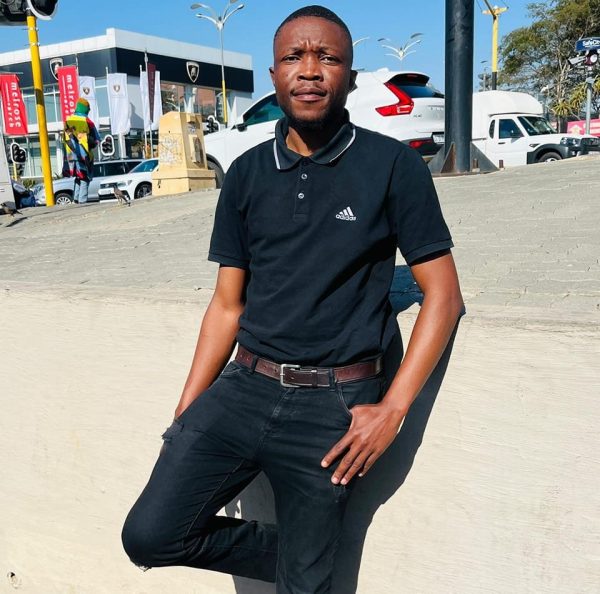
Becoming Father, A Journey Rooted in Tradition by Letlhogonolo Peter
In Botswana, fatherhood is a role profoundly shaped by tradition. One of the most significant practices is the waiting period before a father meets their newborn. This custom allows the mother and child time to bond while the father prepares emotionally and mentally for his new responsibilities. It is a tradition that fosters patience and reverence for the process of becoming a parent.
My journey into fatherhood reflects this cultural experience. On December 15, 2024, my daughter Lowapi was born at Princess Marina Hospital in Gaborone. Her name, meaning “sky” in Setswana, symbolizes endless possibilities and hope. At 4.5 kg and 51 cm long, she represents the beginning of a new chapter in my life. Yet, as is customary in Botswana, I have not yet met her in person. Instead, I’ve connected with her through photos and videos, cherishing these glimpses of her life while anticipating our first meeting in April.
This waiting period has been a time of profound introspection. It has given me the opportunity to reflect on what it means to be a father and to prepare myself for the responsibilities and joys that lie ahead. Fatherhood, as I’ve come to understand, is as much about emotional and mental preparation as it is about physical presence. It’s about embracing the values of love, care, and responsibility while honoring the traditions that define us.
When I finally meet Lowapi, it will be a moment of transformation, solidifying my identity as a father. This journey has shown me that identity is not static; it evolves with our roles and experiences. By balancing cultural heritage with personal growth, fatherhood becomes a profound expression of who we are and who we aspire to be.
For me, fatherhood is not just about guiding and nurturing my daughter it’s about learning and growing alongside her. It’s a journey shaped by love, tradition, and the anticipation of a life shared together.
How much does your culture shape you?
Discover more from Happiness Between Tales (and Tails) by da-AL
Subscribe to get the latest posts sent to your email.


Hi da-AL, your commentary about the reaction of your relatives to your abuse is not surprising to me. Rejection of the abused instead of the abuser is one of the sad truths that keeps this cycle from repeating itself. It is interesting to read about the Botswanian fatherhood culture. Not seeing the child for four months is not culture here in South Africa. That is quite hard for the mother as she has to manage caring for a newborn infant alone.
LikeLiked by 1 person
It wasn’t something I knew before and you are absolutely correct. Does South Africa have any new father traditions that are different from US ones? Here they rarely even get time off from work
LikeLike
Professional firms in South Africa give new fathers 2 weeks paternity leave. Moms get 4 months paid maternity leave and can take 2 months unpaid.
LikeLiked by 1 person
That doesn’t seem like enough for fathers but it’s definitely better than here
LikeLike
💛 When I had my babies, TC only got three days off
LikeLiked by 1 person
Sorry. That’s terrible. Thank goodness times have changed
LikeLike
Yes, it has changed
LikeLiked by 1 person
Sadly, it is not uncommon for relatives to confuse or even reject an abuse victim, rather than providing genuine comfort and support. It is wonderful to hear that you found your solace elsewhere. I spent years “researching” fathers and men in general in the fields of anthropology and psychology, all the while seeking an explanation for my own father’s abusive behavior and confirmation that there were good men in the world. Thankfully, my experience has confirmed that there are good men.
Wishing you every happiness,
A. ❤
LikeLiked by 1 person
I can totally relate Anna. For a while I almost envied people who could blame to their parents challenge such as addiction etc.
LikeLiked by 1 person
Wishing only the best for you as well Anna ♥️
LikeLiked by 1 person
Love the video! The book review about fatherhood is very touching! Parenthood is often accidental, and many new parents know little about parenthood. How much better to be born wanted and prepared for!
Though my upbringing had many positive aspects, my father was quite young when I was born. Some negative aspects of my upbringing may have come from his own upbringing. Corporal punishment was one of those carryovers, I think.
Take care, daAL! Have a great week! 💕
LikeLiked by 1 person
Very true that parenting is complicated especially for young ones. But I think kids understand mistakes and parents striving to be good. Parents and other relatives who continue to be dismissive and worse later are another matter. Thanks for your thoughtful comment and the good wishes Cheryl. Hope you have a happy week too 🥰
LikeLike
Like! (not working)
LikeLiked by 1 person
It took courage for you to reveal the wrongs done to you, da-AL. Hopefully, Zumba will continue to help you shake off some of your anxieties. Thank you for sharing Letlhogonolo Peter’s explanation of the traditions of fathers in Botswana. Very interesting! 🙂
LikeLiked by 1 person
Thanks and you’re welcome Nancy 😊
LikeLiked by 1 person
“I didn’t love my abuser enough”, yeah right, this leaves me speechless!
I love the video! My favourites are the two ladies before your trio and later one lady in an orange t-shirt dancing alone. But they were all really good!!! I am amazed that they can dance like that in those high healed shoes though.
It is good for young parents to be prepared about their new role in life by somebody who knows what they are talking about. So I like the model from Botswana.
As far as my culture is concerned, mostly German, I guess that after WWII people had lost their identity, their belief in their country, and had to start building something new. Maybe in rural areas there is more of tradition, but in the cities not so much. My impression was that young people just got married without having any idea what was waiting for them. My grandmother didn’t even explain to my mother (born 1928) what menstruation was. When she got it for the first time, she got told that now that would happen every month, that was it. So parents just learned by doing and without having given parenthood many thoughts beforehand, neither as couple nor with their parents. What good could come out of that? I would say that I freed myself from the examples I had. I thought about the mother role and decided that it was not for me. I never wanted to marry either. You know, how that ended up. 😉
LikeLiked by 1 person
You and I are similar about desire to be mothers and marry. These past few western generations have been very different from each other. In the times when my parents had children it was simply something they did because everyone else did it. Now many people are parents by choice and many are older etc. parenting no matter what looks very confusing and difficult to me
LikeLiked by 1 person
Yes, same here … ❤
LikeLiked by 1 person