
The holiday season is here—which can be good, bad, or both. If you’re a novelist like me (here’s info about my books), perhaps you too find some solace in how complex situations can lead to story writing gold? I’d love to hear what you think in the comments!
Below you’ll find a bit more about our trip to Norway — but first, on a more local level, we visited the circus right here in Los Angeles…
A Great Afternoon at Circus Vargas
Circus Vargas was founded in 1969 right here in California. It’s an old-fashioned big top tent style one, with a super intimate family-owned vibe and that no longer uses animals. Everyone involved works multiple roles.

This year’s theme is Hollywood’s golden era, in all its feather headbanded and velvet curtained glory. Modern-day clown and juggler Stevie Caveagna hails from five generations of Italian circus entertainers…
Liina, an aerialist with dazzling grace and strength, partnered with self-taught marksman Martti Peltonen, for nail-biting cross-bow stunts…

Meza Troupe, originally from Colombia, cycles, forms pyramids, and more…

Another multi-generational circus dynasty, The Faltyny Family of the Czech Republic, commands the unicycle…

More of Our Tour through Norway
From Bergen, we headed along the Sognefjord to Balestrand Village.
(Note: all posts about our visit to Norway are here and here and here and here and here and here and here and here and here and here and here and here and here and here and here and here.)

The boat ride there offered lush views and plenty of crisp breezes…
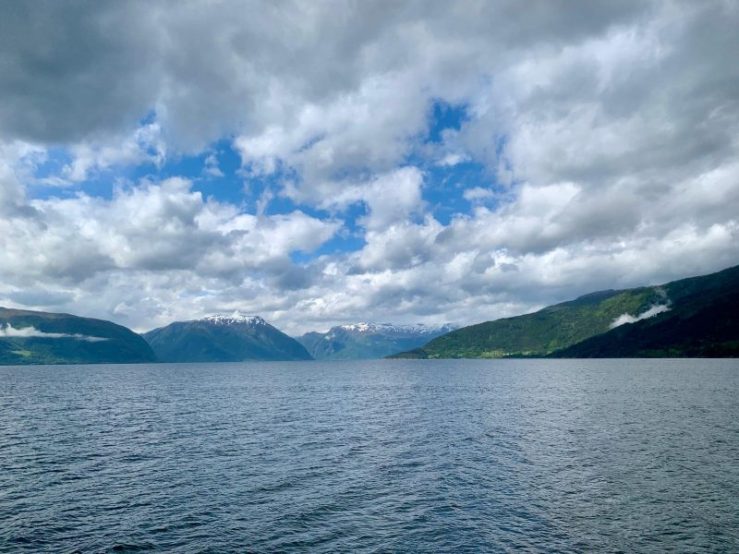
Our hotel offered more gorgeous views. The little tan building is a hot sauna from where visitors warm up only to dive into the frosty cold water…

Balestrand’s first church, St. Olaf’s, was built in 1897 by English settlers…

It’s built in the style of a stave church…

This Week’s Guest Blog Post
I’m thrilled to introduce you to blogger/author Kana Smith. She’s a self-described writer, explorer, coffee-drinker, recovering addict, barefoot linguist, book-dragon (“bookworm” doesn’t cover it), raconteur, sailboat skipper, research diver, tattooed scholar, pirate, poet, spiritual adventurer, photographer, cartographer, joyful wife, island-girl at heart, and–not surprisingly—an avid list-maker. Check out her blog for more about her and the books she’s published.

Here Kana ponders how books and travel have things in common…
A Faceful of Cake by Kana Smith
I was taking some paperbacks off my bookcase yesterday, to donate to our RV Park’s “take-a-book-leave-a-book” shelf in the laundry room, which was getting pretty sparse. (I replenish it every year with the public library’s annual book sale, but that’s still a few weeks off, and my donations from last week have already been converted to gaps on the shelf.) Some of these titles I don’t need to re-read, and the ones I intend/expect to read again, I also own in e-book form. So I swept these up for give-away.
One book, though—Vagabonding, by Rolf Potts—was so full of my own marginalia and annotations that I held it back to look through them. That’s one thing I miss with e-books. Oh, you can highlight passages and add “notes” (and I do), but it doesn’t feel like the same visceral interaction with the page as when I underline or annotate on the actual paper of a physical book.
Yes, I’m one of those people who write in books.
I didn’t grow up doing it. I was trained up by a voracious reader who didn’t even permit the turning-down of corners, let alone desecrating with a pen! So I came to the practice late—but I’ve embraced it wholeheartedly, as this copy of Vagabonding can attest. Some of my books even have multiple layers from subsequent readings, a sort of conversation with myself atop the conversation I was having with the writer.
One of the books I took to the laundry-library last week was actually a fascinating history of the practice of writing in books (Marginalia, by H.J. Jackson), and I see that that book has already moved on to a new reader. What Jackson calls “the art of annotation” has been around for as long as books have. Coleridge used to annotate books and then give them (the book and his annotations) to his friends as gifts.
It was Anne Fadiman’s Ex Libris that led me to alter my interactions with the books I read. She wrote of “courtly book-lovers” (the careful folks who wouldn’t dog-ear a page) and “carnal book-lovers”—the ones who dove in and got messy. The ones who wrote in their books and marked what they loved and added their own thoughts and interacted with the writing.
It’s the literary equivalent of having chocolate all over your face after eating a cake.
I realized how much that appealed to me—and I picked up a pen! This copy of Vagabonding is a substantive example—my reading of this book was like having chocolate in my hair after eating the cake.
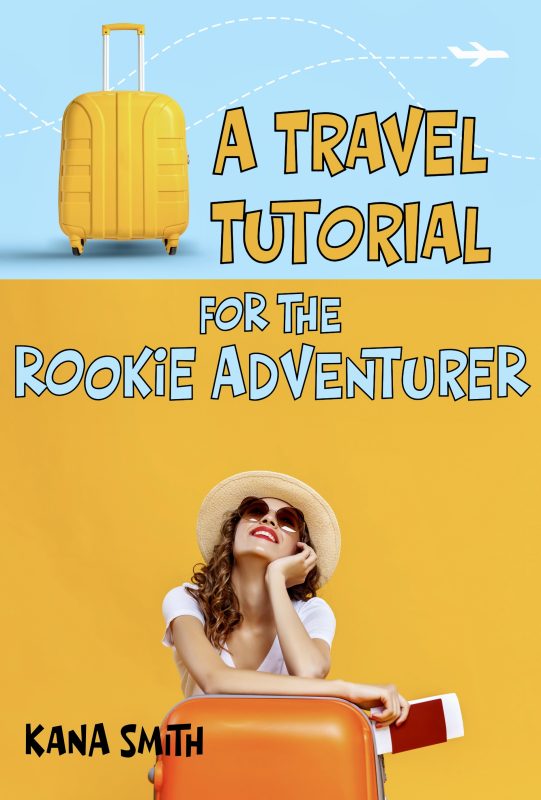
The book itself is about a mindset for travel, a mindset curiously akin to the practice of writing in books. A mindset of diving in, and interacting with what’s around you, of immersing yourself without hurry or agenda or checklist or schedule. (I have so much to say on the subject, in fact, that I’ve since written a book myself: A Travel Tutorial for the Rookie Adventurer).
I’m counting down to our own next adventure—we’ve booked ten days in my old “stomping grounds” on the Big Island of Hawai’i. I went to school there, and hung out with a group of local guys, and we drove around to the sunny side of the island on weekends, scuba-dived all weekend in the places tourists never found, barbequed fish we speared and slept on beaches, and drove back for classes Monday mornings.
This trip we won’t be sleeping on beaches (we’re too old for that—plus, haoles can’t get away with it), but I did manage to book the little inn where I stayed with my mom when she came out to visit me. A saltwater pool with waves splashing into it over the seawall, fresh tropical fruit by the pool every morning… Mom and I borrowed a styrofoam cooler and rolled-up tatami-mats from the motel office to take a picnic to the beach, and went out at night to see Kilauea’s lava flowing (glowing!) into the sea. We hiked to a waterfall wearing visors woven from palm leaves (purchased at the side of the road from the fellow who made them), and got drenched with warm rain in a botanical garden graced with all the colors of Eden. We drank wine in the dark with our bare feet propped on the balcony rail above crashing surf, and I still have the snapshot of us standing on white sand with our arms around each other’s shoulders, wearing matching blue bikinis.
When my dad came out to visit me the following summer, I made a list for him of all the things I could think of to do and to see. I intended it for a menu—he could choose which things most appealed to him. But he treated the thing as a checklist, and spurred us through the whole list. The. WHOLE. List.
I was drained and ragged by the time he left. And (even exhaustion aside) it was a different “flavor” of visit from the time I spent with my mom. Sure, Dad saw more stuff—but my mom’s visit involved more… interacting with place is the best way I can put it. Dad strode up and down a gorgeous beach for ten minutes and then asked “What’s next?” My mom talked to people, drew out their stories. He looked AT a place; she was IN the place.
Vagabonding puts it well: “The secret of adventure, then, is not to carefully seek it out but to travel in such a way that it finds you.“
It comes down to this… I like to travel the same way I like to read: interactively!
I’d love to hear from you! Do you write in your books, or are you a “courtly” reader? And how do you handle the chaos of the holidays? Let’s talk in the comments.
Discover more from Happiness Between Tales (and Tails) by da-AL
Subscribe to get the latest posts sent to your email.


Kana Smith’s thoughts on writing in books are really interesting – do you think it’s ever okay to annotate a library book? 🤔
LikeLiked by 1 person
da-Al, thanks for sharing more gorgeous pics of Norway and also the pics of Circus Vargas. Circus performers are unique in their talent-but I wish they’d always perform with nets when they’re on that high wire!
Kana Smith, your “Travel Tutorial” will likely save inexperienced travelers, who are fortunate enough to read your book, a lot of time and money-not to mention grief. You have some interesting habits. Writing in books is something I don’t do. Maybe that’s because when they passed out used textbooks hundreds of years ago when I went to school, I’d get the ones with an accumulation of distracting writing notes. I love the chaos of the holidays! 🙂
LikeLiked by 1 person
Norway looks fabulous, thanks for sharing, dear.
(Don’t you just love circuses?! I warmly recommend cirque du soleil. They are a bit pricier, but the show is worth every dime.
LikeLiked by 1 person
given all that it takes to put on shows, move their whole big top here, there & everywhere, they are totally amazing!
LikeLiked by 1 person
Absolutely.
LikeLiked by 1 person