At the risk of being my usual all-over-the-place blog-post-wise, I’ll start with an update on my soon-to-publish my novels journey (click here for more about them)… The short of my writing adventure (that sounds so much nicer than the real bruising that it is), now that I’ve decided to self-publish, waddya know, I’m back to thinking I might give querying agents another go. Why the f**k?! do you say? Well, dang it, any successful (referring to book sales) fiction indie writer I see seems to be niche-specific. Literary fiction is just too huge to promote in a genre-targeted way that isn’t overwhelming in terms of effort and moo-lah. Mind you, none of this is written in stone. Recently a literary agent I pitched five months ago replied with exceedingly generous and doable suggestions, so we’ll see where a bit more editing and then pitching takes me…
Next.. I’m bursting to rave to you about a mind-blowing non-fiction book I just listened to: O-m-g “An Immense World: How Animal Senses Reveal the Hidden Realms Around Us” by Ed Yong will resonate for quite a while. The science journalist casts a wide net around the concept of Umwelt—a German word for the surrounding world and how each species uniquely perceives it.
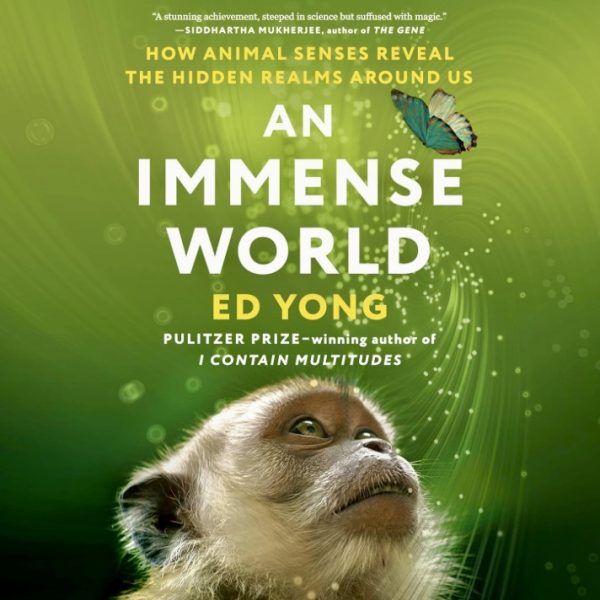
Yong pleads for us to use our unique sense of imagination to tread responsibly. Our urban lifestyles have drawn creatures into our strange and challenging environments. Noise and light pollution harm everything from birds to their insects diets. For instance, flickering lights and/or ones on time sensors are better for nature than the kind that stay on all night. Here he discusses his book…
In the book, Yong notes that all creatures use more than one sense at the same time. Even humans can tap into sonar when we need to, such as Daniel Kish who uses sonar to ride a bike…
From Umwelt to Umbrellas: A Trip to Bergen, Norway
Also… I promised to tell you more more about my trip to Norway’s beautiful Bergen…
(Note: all posts about our visit to Norway are here and here and here and here and here and here and here and here and here and here and here and here and here and here and here.)
This day’s worth of photos starts on our first morning there, as we walked to find breakfast. Landlubber that I am, this was my first experience with boats parked between buildings…

At the indoor part of the fish market, we enjoyed pastries and hot drinks…
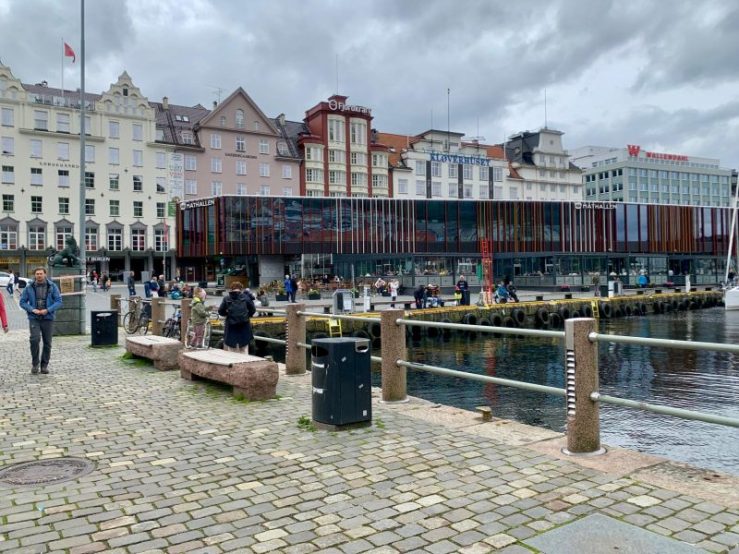
The fish market’s outdoor section featured whale: raw, burgers, and sausage. I couldn’t eat whale without hating myself. Eating reindeer and elk would also give me nightmares…

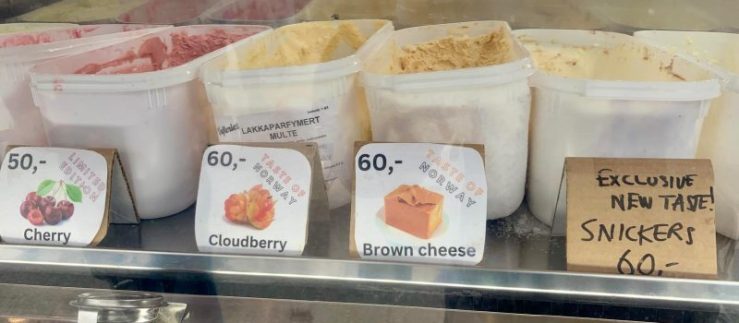
Norway’s brunost is a cheese-like caramelized whey that tastes like dulce de leche, only if it had a bit of goat-y tange to it. Brunost even flavors icecream, as does Scandinavia’s cloudberries, which are extremely difficult to grown…
It was rainy, cloudy, and cool; perfect for strolling hilly streets to catch a free modern dance so fab that we stood in rain for thirty minutes to watch it. Everywhere, public art that addressed respect of the environment, the beauty of aging, and everything in between livened the city…


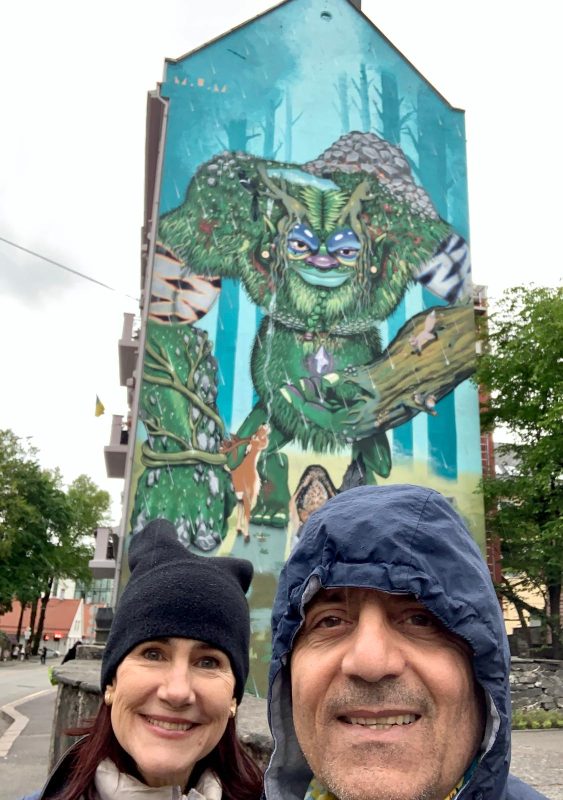

We returned to our hotel at ten that night. Despite cloud cover, it was still light…

The Door is Always Open: Finding Kindness with Janet Stock and the Moomins
Today’s guest blog post is by blogger/author Janet Stock (click here for more about her to contact her), who lives in Lincoln, in the UK. Hard at work on her first novel set in the 13th century, she describes herself as a medieval geek. Her upcoming historical novel, Benedict’s Song, reveals the story of a young boy who wants to become a famous minstrel, but who clashes with his father and society’s expectations as he follows his dream. A prolific genre-hopper, she recently released a fantasy novella calle The Rue Stone. It’s the first in a trilogy called The Dark Stranger. Book 2 will be out in February. As if that’s not enough to keep a writer busy, she’s finishing her dissertation for an MA in Creative Writing with Lancaster University.
Here she takes us along for her visit to Finland’s 80th celebrations of the first Moomin book by Tove Jansson, the Great Flood. Jansson is so beloved in Finland that they’ve dedicated a museum to her! For Janet, Jansson’s themes of immigrants and kindness are as relevant as ever…
The Door is Always Open by Janet Stock
The first Moomin book I ever read, was Comet in Moominland, and I instantly became attached to the little white Finnish troll, Moomin, his friends Sniff and the Snork Maiden, and his mother Moominmamma. Even though in the story, Moomin and his friends believed themselves to be in danger from the fire ball in the sky, there was a gentleness about the writing that made me as a reader believe everything would work out in the end.
Little did I know then that Comet was the second book in a series about the Moomin family, and it all started in 1945 with the first published book, The Great Flood. The author was Swedish illustrator Tove Jansson, and The Great Flood told the story of how Moomintroll and Moominmamma are searching for the missing member of the family, Moominpappa. The tale’s theme of being displaced from one’s home, was written at a time when the world was under the shadow of the war, and Tove’s family experienced a move from Helsinki in fear of the bombs, as did many people of the time. Being a refugee of course is not something ‘of the past’, and I don’t know if Tove would have been surprised or dismayed at how relevant her books still are. With 47 million refugees across the globe and 12 countries currently at war, I believe she would have despaired that things hadn’t improved since 1945. But this doesn’t stop her works from being a beacon of hope and optimism for those who read them.
In Comet, written in 1946, we still see the family in the midst of something looming, mysterious and unfamiliar. But the story emphasises resilience, friendship and of course family, and these themes continue on through the next seven books that Tove wrote about the now beloved Moomins.
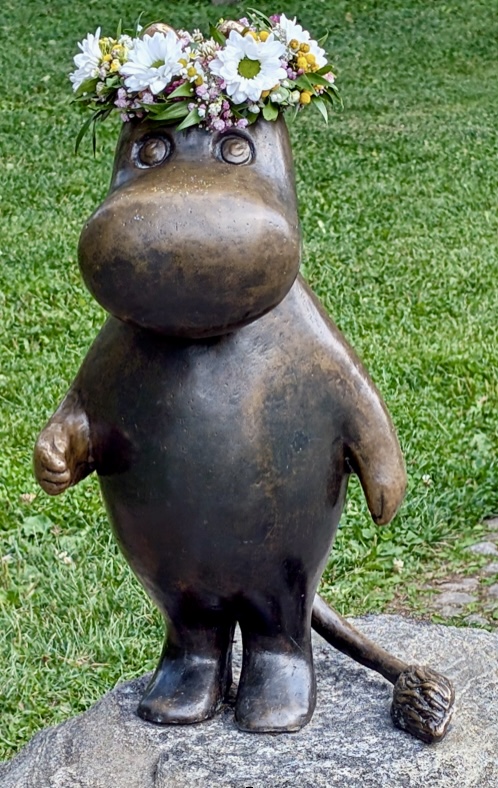
Tove’s birthday falls on the 9th of August, and of course 2025 is the 80th anniversary of the first book being published, so what better than celebrating both events together! I was lucky enough to visit Tampere in Finland, home to the world’s only Moomin Museum to join in with the celebrations. Nine books, multiple TV shows, two theme parks and countless mugs later, the Moomins are still as big a draw for people from all over the world as they ever were. People of all ages came to mark the occasion, and after viewing the exquisite hand-made models, original drafts of the books and countless photographs, a ceremony took place outside Tampere Hall, by the small statue of Moomintroll himself. With music and singing from local children, we all enjoyed the summer sun and the camaraderie of being Moomin fans together.
If you have never read one of the Moomin books, now is the time to start! Don’t be put off by the fact that they appear to be for children, they really are relevant for all ages. But if you want to read other works first, Tove wrote several novels aimed at adults, the acclaimed Summer Book is a good place to start, and tells the tale of an elderly woman (based on Tove’s mother ‘Hamm’) and her six-year-old granddaughter Sophia, who spend a summer together on a tiny island in the Gulf of Finland. Tove’s family spent their summers on islands in the archipelago, and this is another recurring thread in her works, and she continued the tradition into old age. Building a simple house on the family island, Klovharu, and spending summers there with her female partner ‘Tooti’, when being homosexual was still illegal in Finland.
Tove was a trailblazer as a writer, artist and woman, and her little creation is an everlasting symbol of hope, friendship and acceptance to many around the world.
Question of the day:
Which of these themes—the writing struggle, the Umwelt of animals, or the kindness of Moomins—resonates most with you right now? Let me know in the comments!
Discover more from Happiness Between Tales (and Tails) by da-AL
Subscribe to get the latest posts sent to your email.


[…] our visit to Norway are here and here and here and here and here and here and here and here and here and here and here and here and here and here and […]
LikeLiked by 1 person
[…] our visit to Norway are here and here and here and here and here and here and here and here and here and here and here and here and here and […]
LikeLiked by 1 person
[…] (Note: all posts about our visit to Norway are here and here and here and here and here and here and here and here and here and here and here and here and here.) […]
LikeLiked by 1 person
wishing you a relaxing holiday season & great year ahead!
LikeLike